
Lydia Hartsfield, Senior editor
Being senior editor here mostly means deciding what goes into a ranking and what stays out, and I say no more often than yes. A listing can print a big acreage figure on the box. I want to know what the manual says about mowing time per charge, the recommended schedule and the slope that figure assumes. A claim that only lives in the marketing copy doesn't make it into our verdict.
Most of my week is spec sheets, manuals, warranty pages and owner reviews, read side by side. I start with the unhappy reviews, because that's where a mower's habits show up: the corner it never finishes, the narrow side passage it refuses, the dock it can't find after rain. One owner with that problem is bad luck. Ten owners describing it is a pattern, and patterns go into the verdict.
I write our guides on choosing a robot mower, on lawn capacity and on large lawns. I edit most of the others.
My own bias, since you'll find it in my guides anyway: measure your lawn before you read a single product page.
Areas of expertise
- Measuring the lawn before choosing a mower
- Acreage claims: total area vs. per charge
- Large and multi-zone lawns
- Owner reviews: stuck corners, missed strips, dead docks
- Keeping the rankings current
How I work
- I read the manual's mowing-time and schedule pages before I trust any coverage figure.
- I sort owner reviews by problem, not by star count, so a repeated complaint stands out.
- I rework a ranking when a model, a price or a listing changes, and the update date moves with it.
- If a listing leaves a number out, our page leaves it out too. I don't guess one.
Articles by Lydia Hartsfield
Written
 Buying and ownership
Choosing a Robot Lawn Mower: Measure the Lawn First
A practical checklist for lawn area, slope, boundary method, sky view and exact-model research before you shortlist any robot mower.
Read the guide Buying and ownership
Robot Mower Lawn Capacity: Acres, Square Feet, Per Charge
What a stated capacity does and does not tell you, how we convert square feet to acres, and why per-charge figures are not the same number.
Read the guide Buying and ownership
Robot Mowers for Large Lawns: Beyond the Acre Figure
Zones, passages, per-charge coverage, antenna reach and delivery weight matter as much as the stated capacity when the lawn is half an acre or more.
Read the guideEdited
 Buying and ownership
Wire-Free vs Boundary-Wire Robot Mowers: Which Fits
How virtual boundaries and buried perimeter wire differ in setup, repairs, sky view and lawn shape, using exact listing wording.
Read the guide Buying and ownership
RTK, Vision and LiDAR Robot Mower Navigation Explained
What each navigation acronym describes, what it needs from your property and why a technology name is seller wording rather than a positioning test.
Read the guide Buying and ownership
Robot Mowers for Slopes: Reading Percent and Degrees
How to measure your slope, convert between percent and degrees, and compare the result with a listing figure without treating it as a test.
Read the guide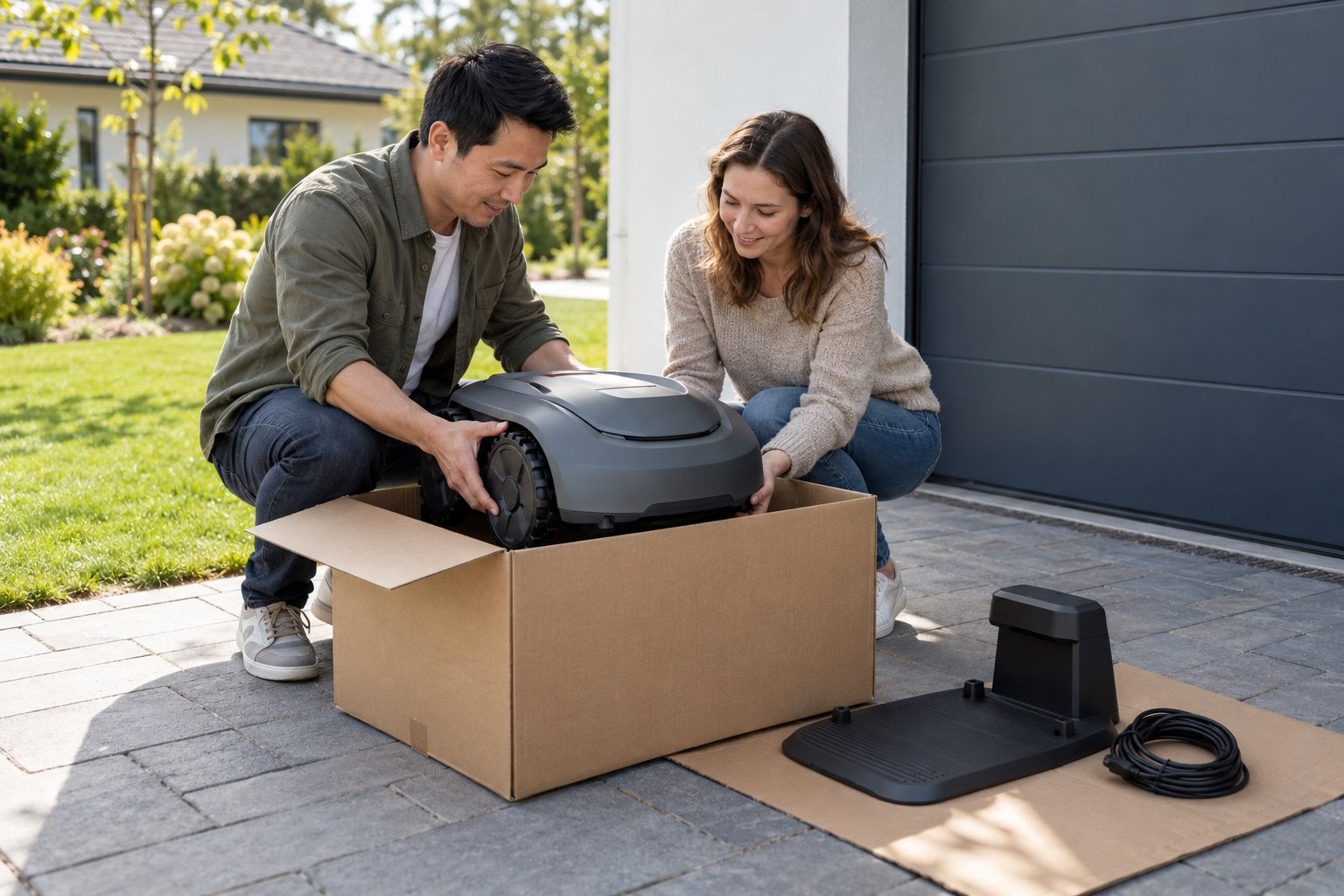 Buying and ownership
Robot Mower Setup: Base Station, Antenna and Mapping
What to settle about power, station placement, antenna sky view and mapping before the box arrives, using exact package lists.
Read the guide Buying and ownership
Robot Mowers, Pets and Children: Detection Claim Limits
How to read obstacle-detection, lift-sensor and scheduling statements in listings without treating them as a substitute for supervision.
Read the guide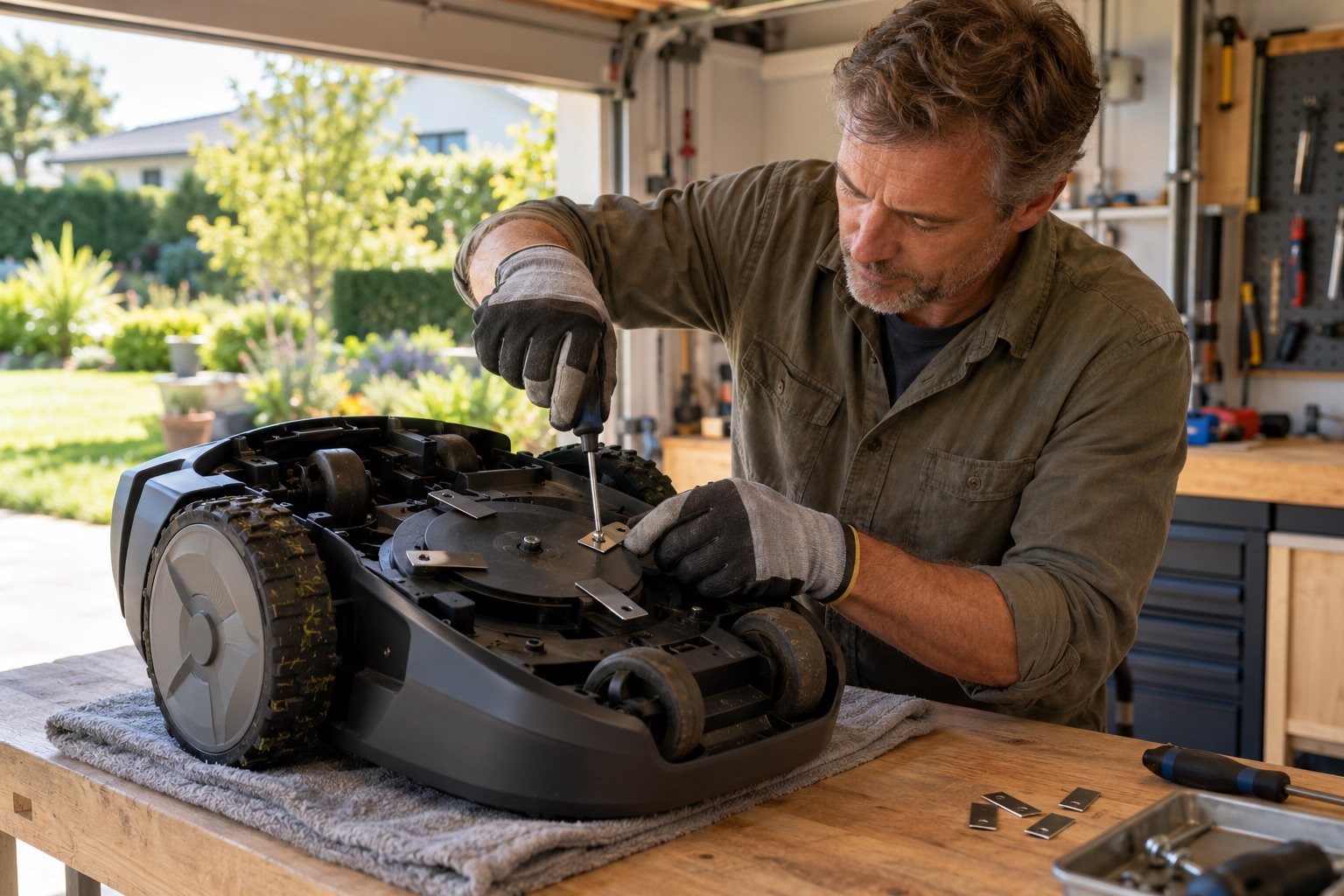 Buying and ownership
Robot Mower Blades and Maintenance: Match the Exact Model
How to identify blade type, replacement intervals and cleaning steps from the manual, and why an accessory compatibility list is not proof of fit.
Read the guide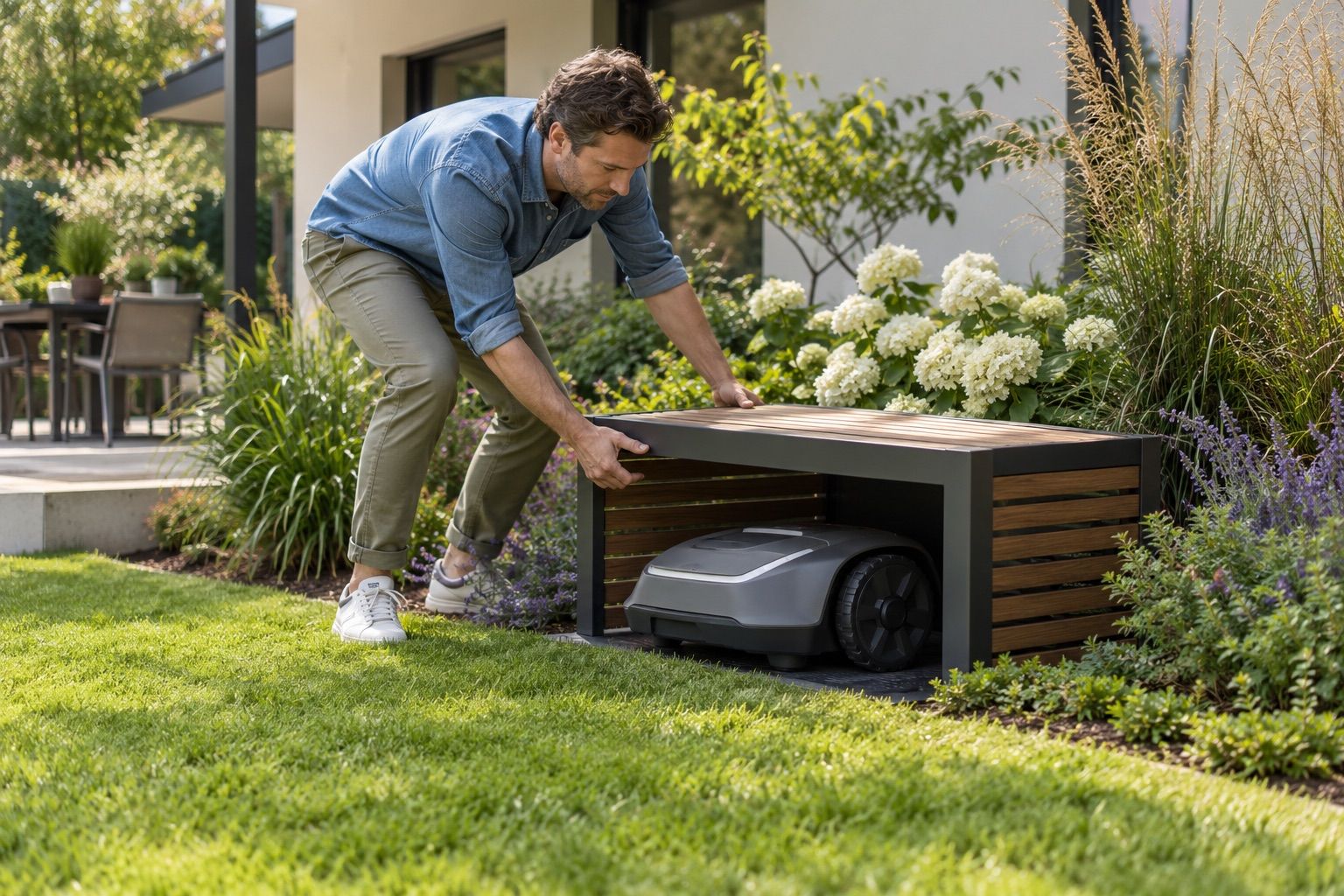 Buying and ownership
Robot Mower Garages, Wire, Antenna Mounts and Accessories
How to match a garage, boundary wire, antenna mount or wheel kit to the exact mower model instead of to a brand name or a photograph.
Read the guideHow we compare and rate the mowers is explained on How we rate. The rest of the team: Our editors.